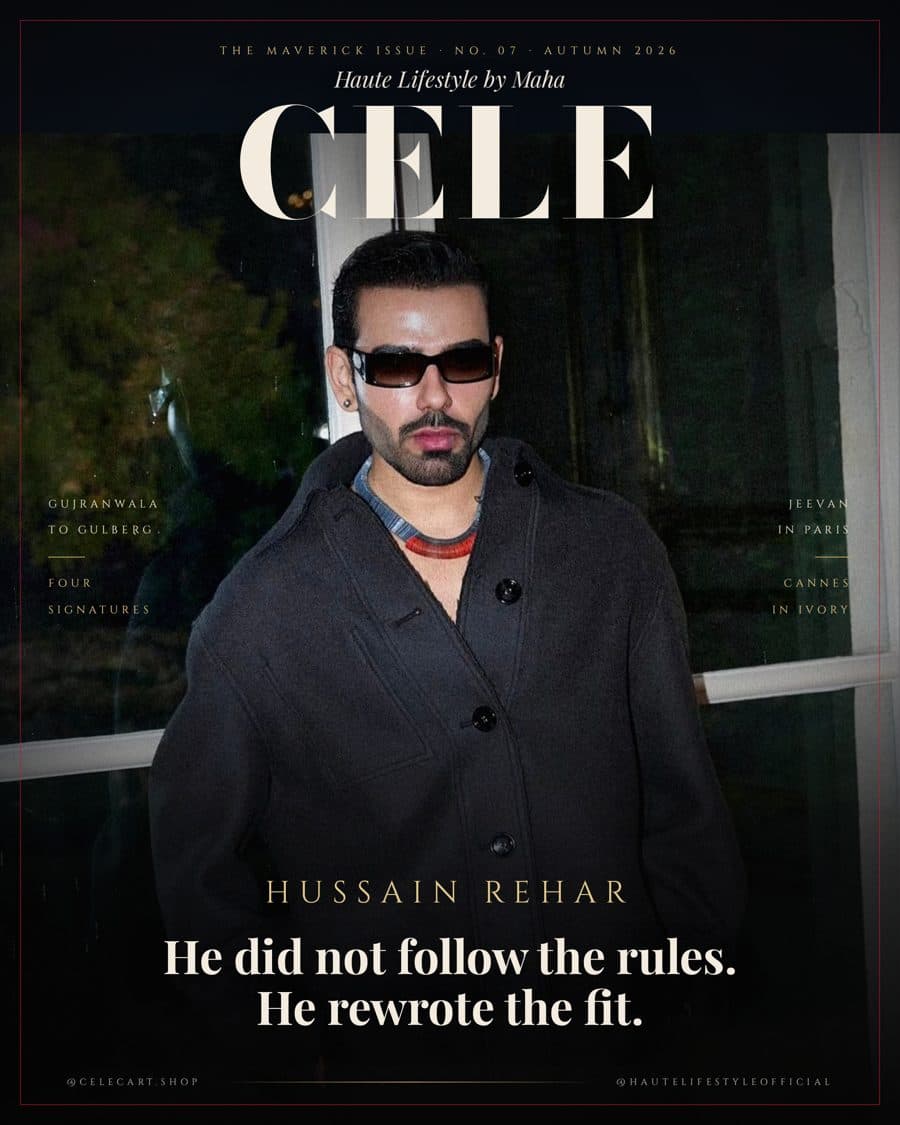
Rizwan Beyg — He Did Not Follow Fashion. He Rescued It.
CELE's Heirloom Issue on the architect-turned-couturier who dressed a princess in 1996, took his karigars from the city to the villages, and has kept the thread for thirty-seven years.
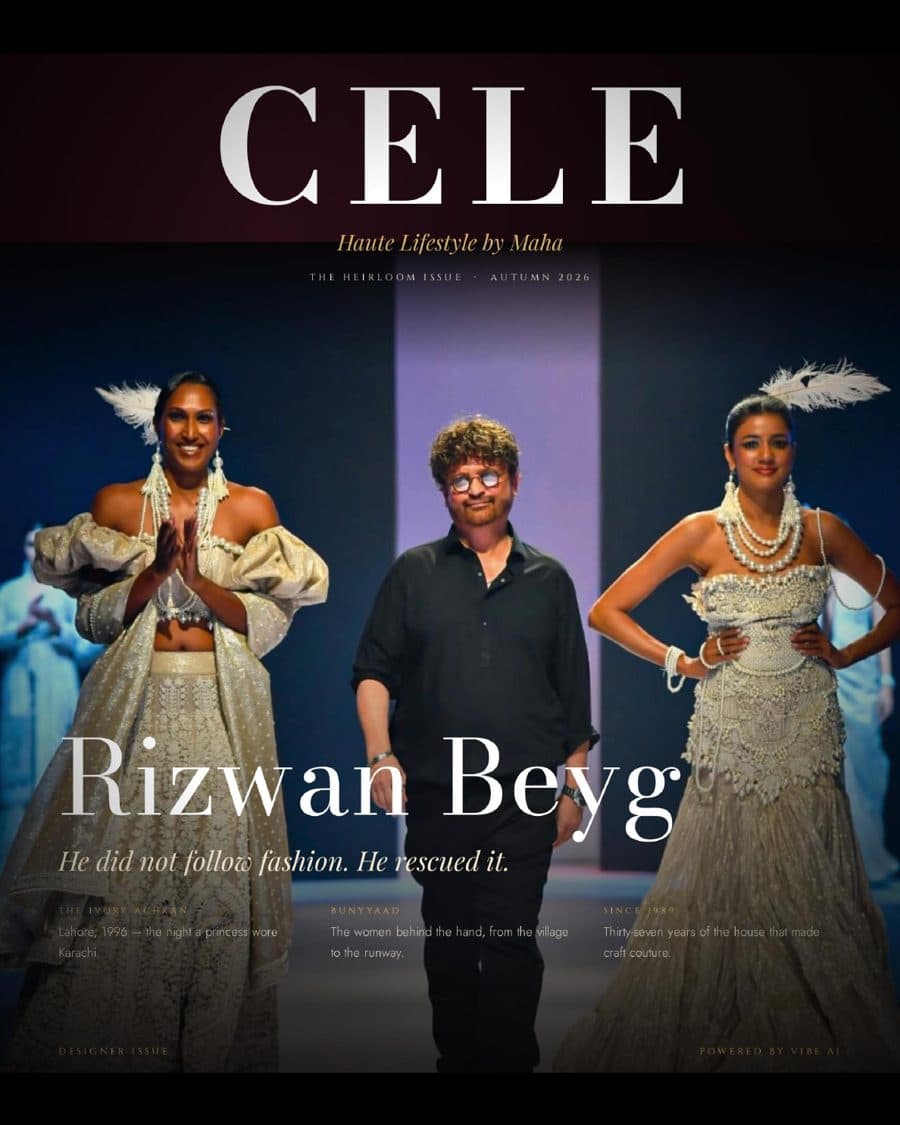
He did not follow fashion. He rescued it.
This is the blog edition of our Autumn 2026 Heirloom Issue on Rizwan Beyg. The chapters follow the issue's running order.
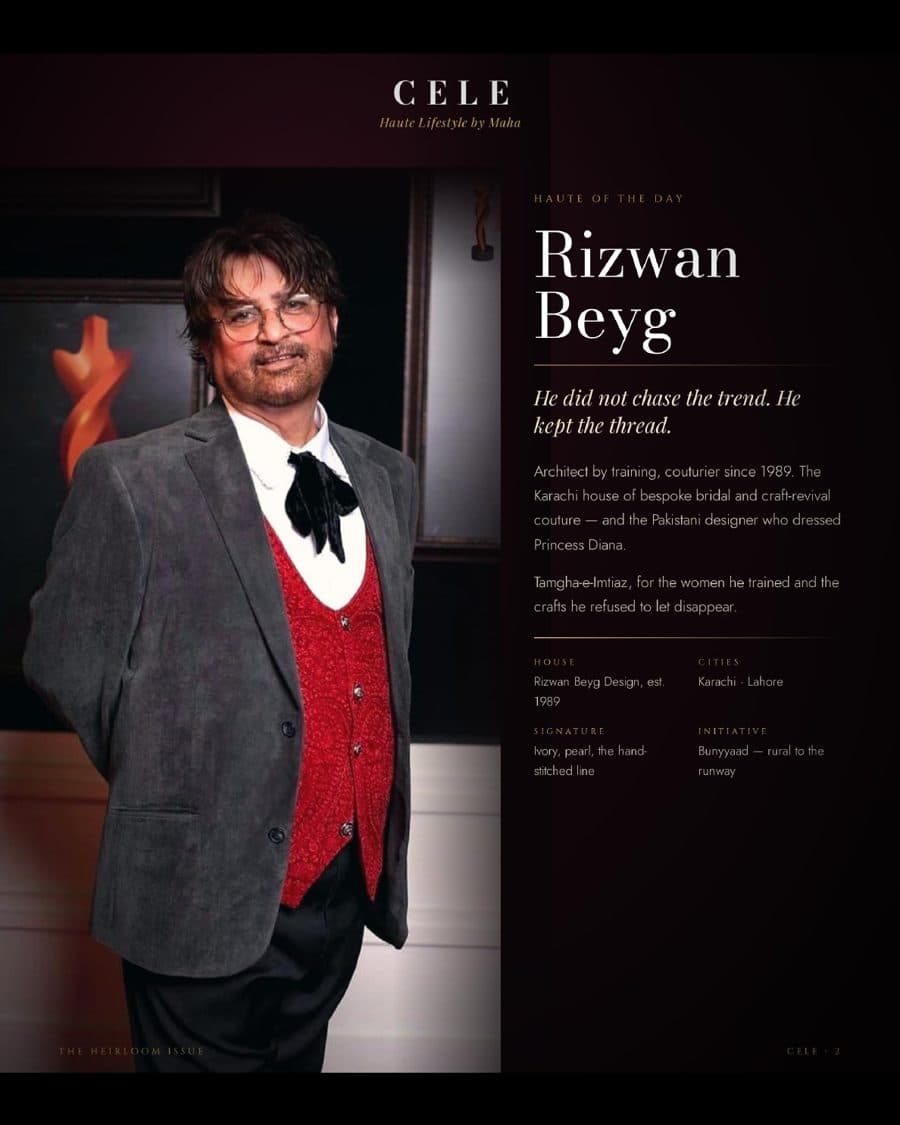
The Designer — Rizwan Beyg
The Designer
He did not chase the trend. He kept the thread. Architect by training, couturier since 1989: the Karachi house of bespoke bridal and craft-revival couture, and the Pakistani designer who dressed Princess Diana. Tamgha-e-Imtiaz, for the women he trained and the crafts he refused to let disappear. Signature: ivory, pearl, the hand-stitched line. Initiative: Bunyyaad — rural to the runway.
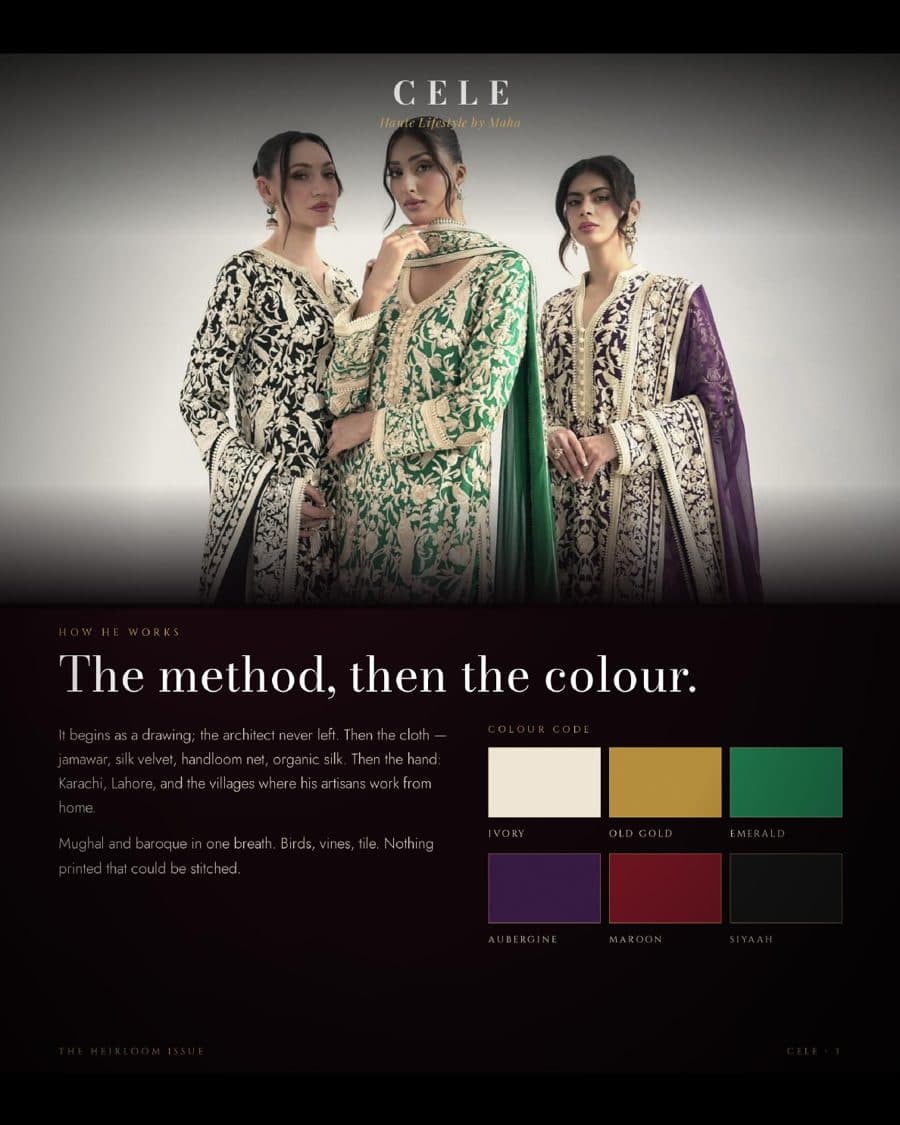
The method, then the colour
How He Works — The Method, Then the Colour
It begins as a drawing; the architect never left. Then the cloth — jamawar, silk velvet, handloom net, organic silk. Then the hand: Karachi, Lahore, and the villages where his artisans work from home. Mughal and baroque in one breath. Birds, vines, tile. Nothing printed that could be stitched. Colour code: ivory, old gold, emerald, aubergine, maroon, siyaah.
The house
The House — Karachi First. Lahore Since 2022.
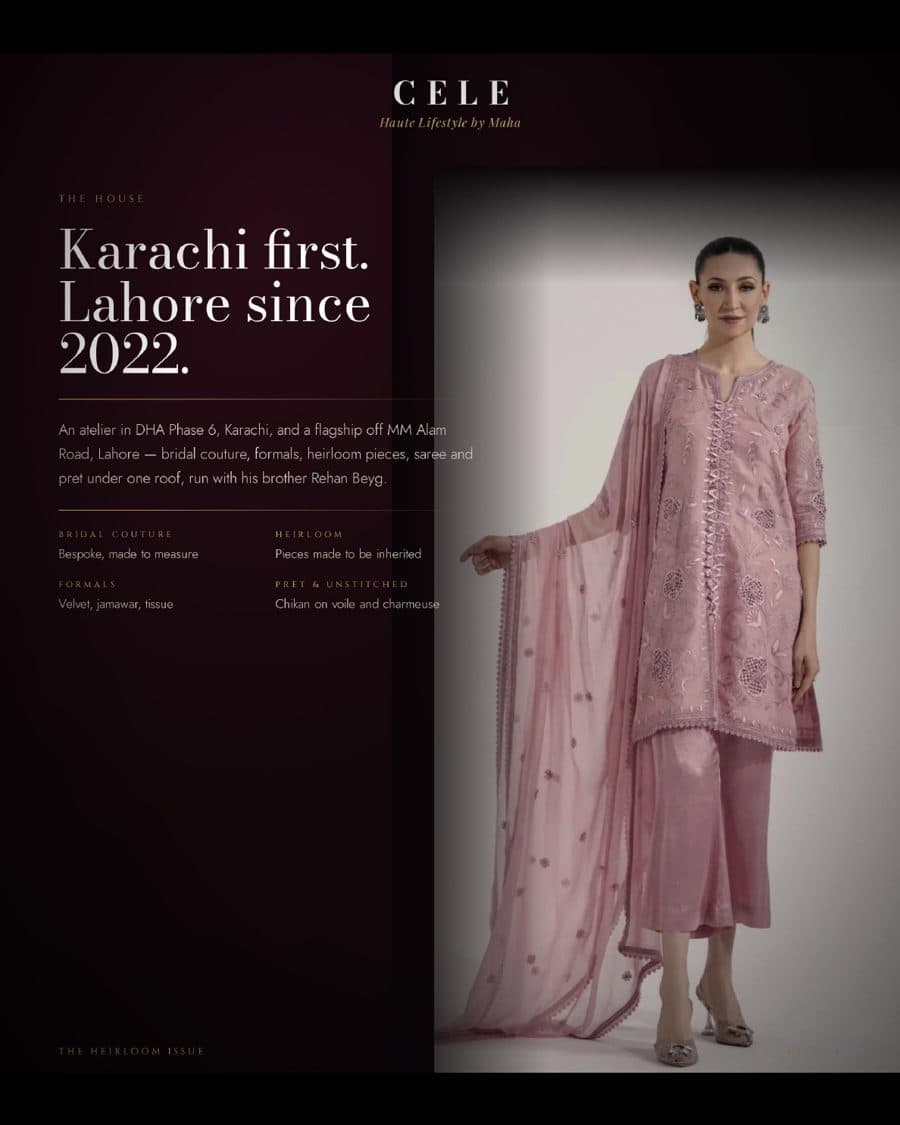
An atelier in DHA Phase 6, Karachi, and a flagship off MM Alam Road, Lahore: bridal couture, formals, heirloom pieces, saree and pret under one roof, run with his brother Rehan Beyg. Bespoke, made to measure; velvet, jamawar and tissue for formals; pieces made to be inherited; chikan on voile and charmeuse for pret and unstitched.
1996 — the ivory achkan
The Archive — 1996, the Ivory Achkan
Jemima Khan asked for a design for a guest she would not name. Only measurements. He guessed who, and learned that she loved ivory and pearls. What he made was a man's achkan, hand-embroidered end to end, cut for a woman. Princess Diana wore it to the Shaukat Khanum fundraiser in Lahore — and once more in London. Also dressed: Jemima Khan, Princess Sarvath of Jordan, the Sheikha of Sharjah. The lesson: know the wearer. Let the cloth speak first.
The craft
The Craft — Nothing Printed That Could Be Stitched
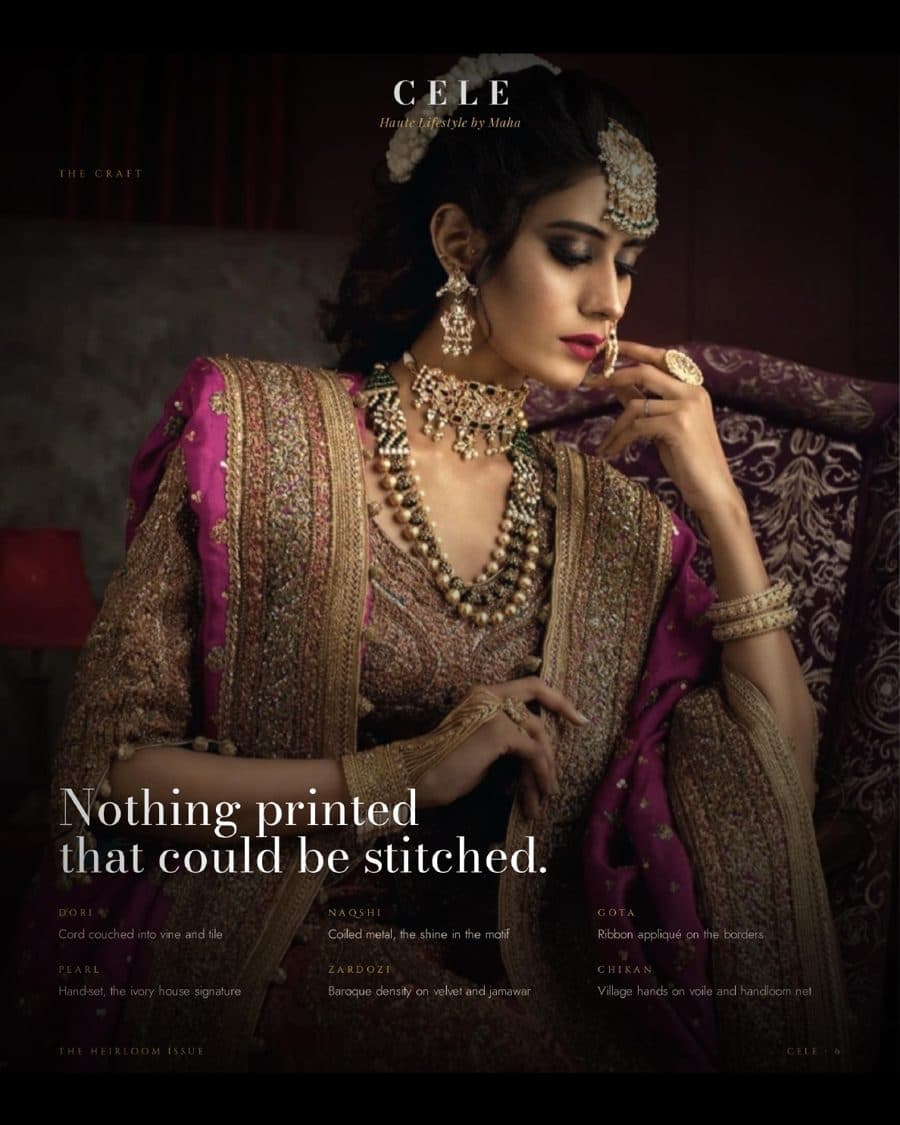
Dori, cord couched into vine and tile. Pearl, hand-set, the ivory house signature. Naqshi, coiled metal, the shine in the motif. Zardozi, baroque density on velvet and jamawar. Gota, ribbon appliqué on the borders. Chikan, village hands on voile and handloom net.
Bunyyaad — rural to the runway
Bunyyaad — Rural to the Runway
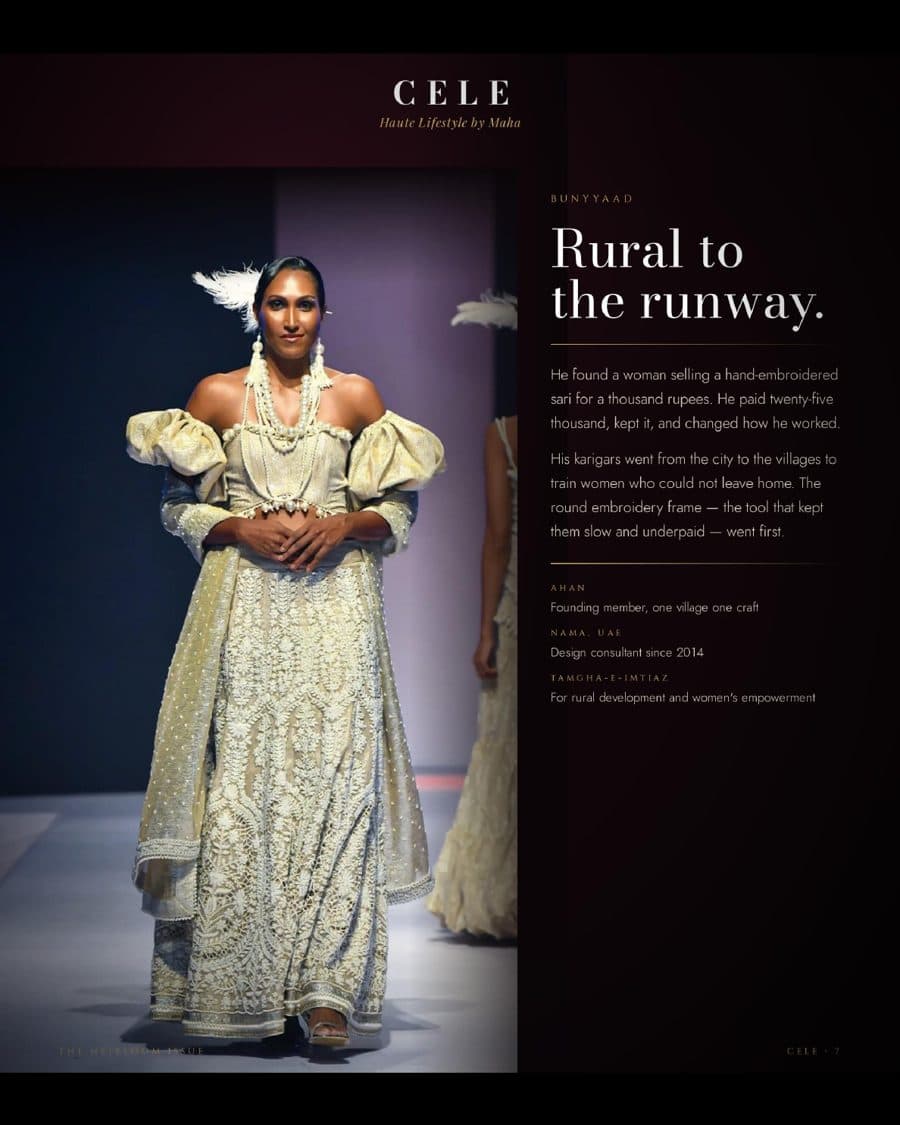
He found a woman selling a hand-embroidered sari for a thousand rupees. He paid twenty-five thousand, kept it, and changed how he worked. His karigars went from the city to the villages to train women who could not leave home. The round embroidery frame — the tool that kept them slow and underpaid — went first. Founding member of Ahan (one village, one craft); design consultant to Nama, UAE, since 2014; Tamgha-e-Imtiaz for rural development and women's empowerment.
The silhouette
The Silhouette — Long, Straight, Unhurried
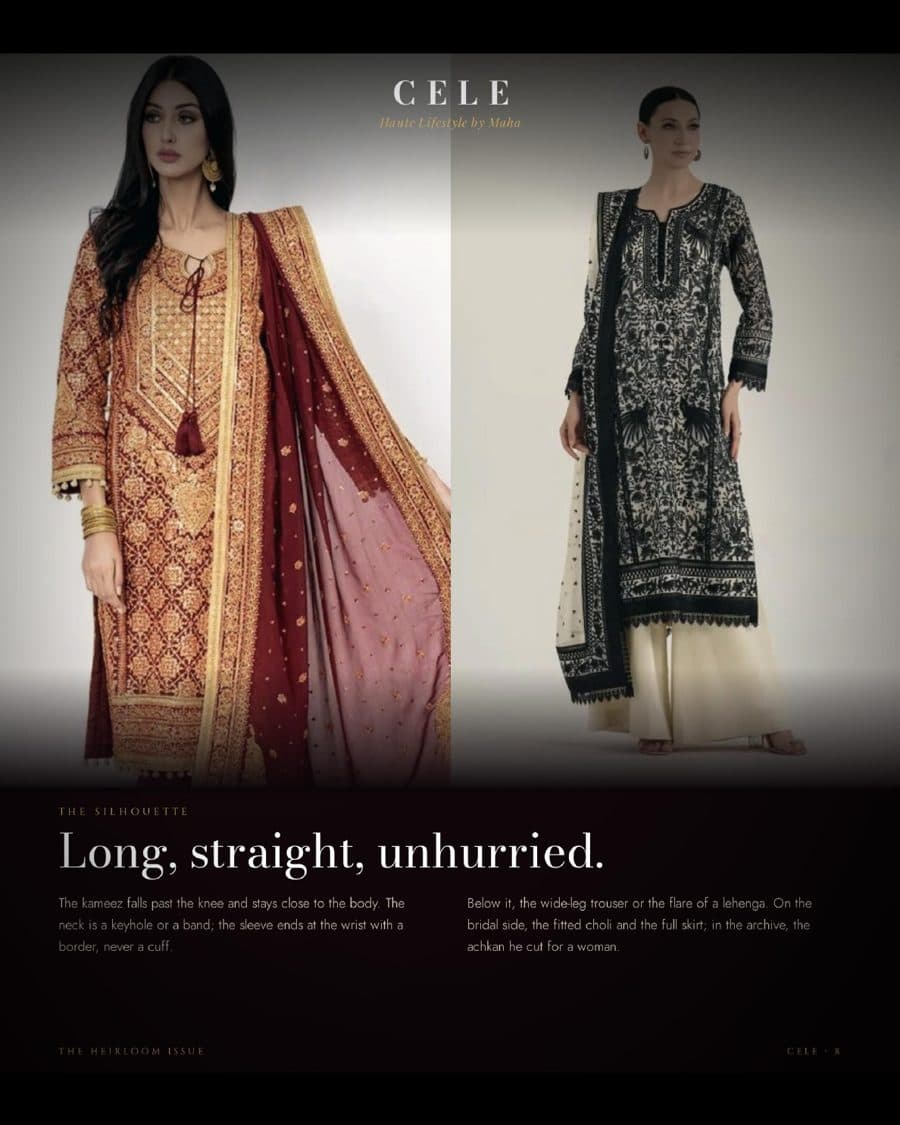
The kameez falls past the knee and stays close to the body. The neck is a keyhole or a band; the sleeve ends at the wrist with a border, never a cuff. Below it, the wide-leg trouser or the flare of a lehenga. On the bridal side, the fitted choli and the full skirt; in the archive, the achkan he cut for a woman.
The palette
The Palette — Ivory Is the House. Everything Else Visits.
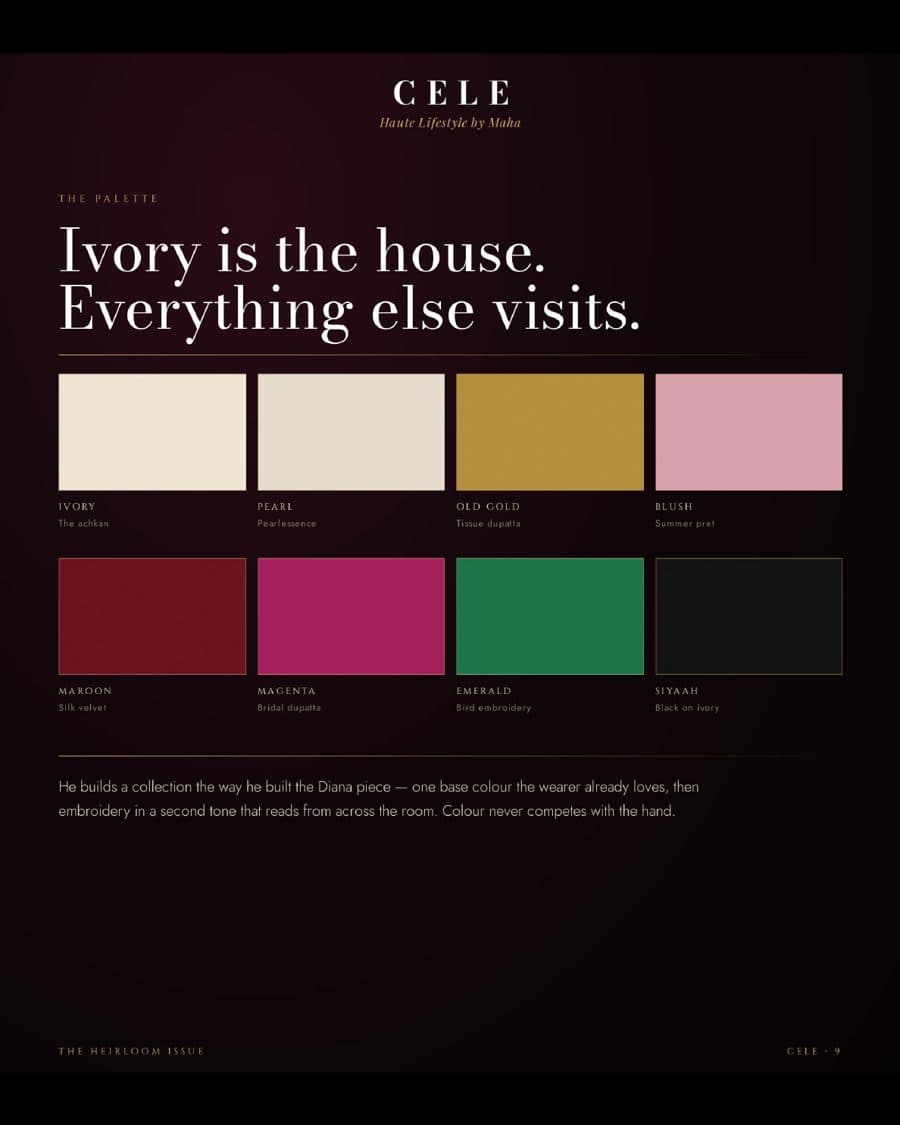
Ivory for the achkan, pearl for pearlessence, old gold for the tissue dupatta, blush for summer pret; maroon in silk velvet, magenta for the bridal dupatta, emerald for bird embroidery, siyaah as black on ivory. He builds a collection the way he built the Diana piece: one base colour the wearer already loves, then embroidery in a second tone that reads from across the room. Colour never competes with the hand.
The bridal
Bridal Couture — The Bridal
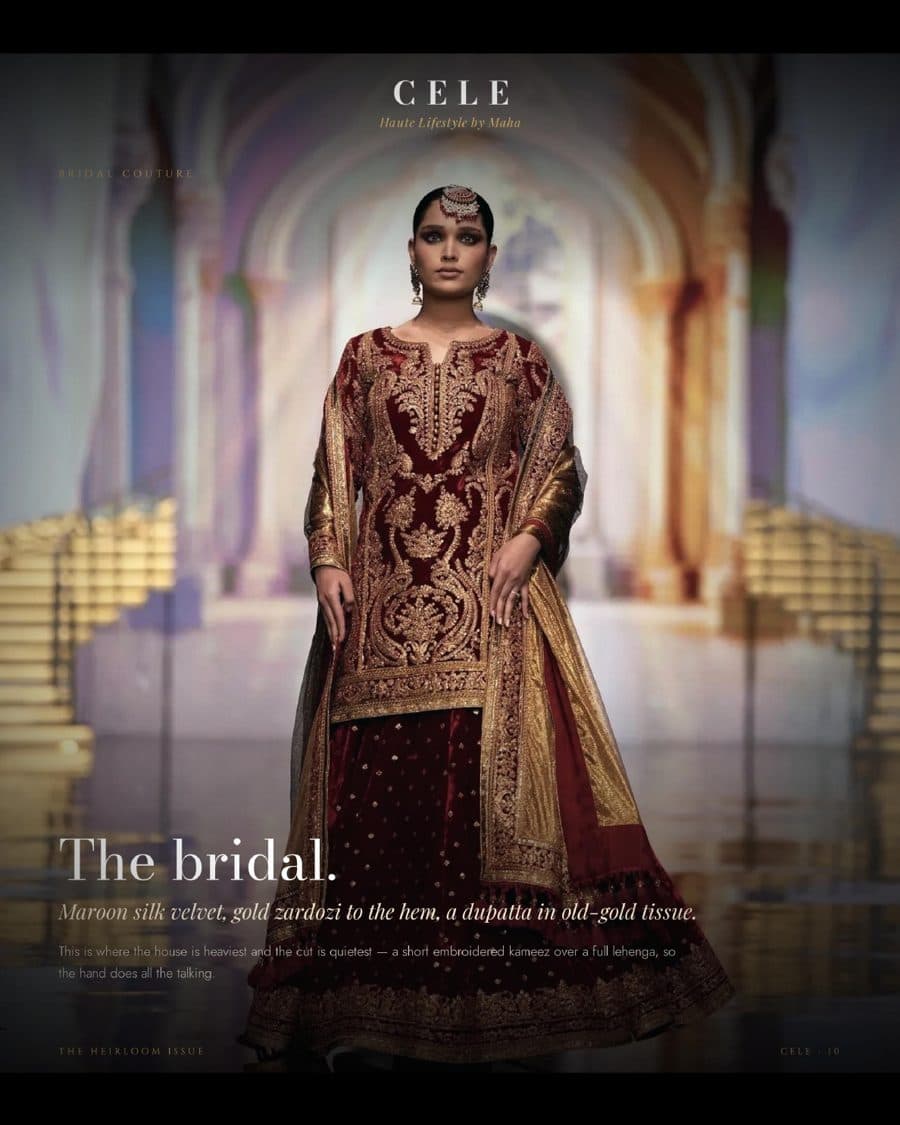
Maroon silk velvet, gold zardozi to the hem, a dupatta in old-gold tissue. This is where the house is heaviest and the cut is quietest — a short embroidered kameez over a full lehenga, so the hand does all the talking.
The Verdict
An heirloom is not what you buy. It is what the hands remember. Thirty-seven years on, Rizwan Beyg is still the house where the village frame and the royal wardrobe meet. That is the verdict, and the reason this issue exists.
Why he matters to CELE
Celecart's founding thesis is that South Asian craft belongs alongside international luxury, not in a separate aisle. Beyg has argued that case with needle and thread for nearly four decades, and built the supply chain — from village to runway — that makes it true.
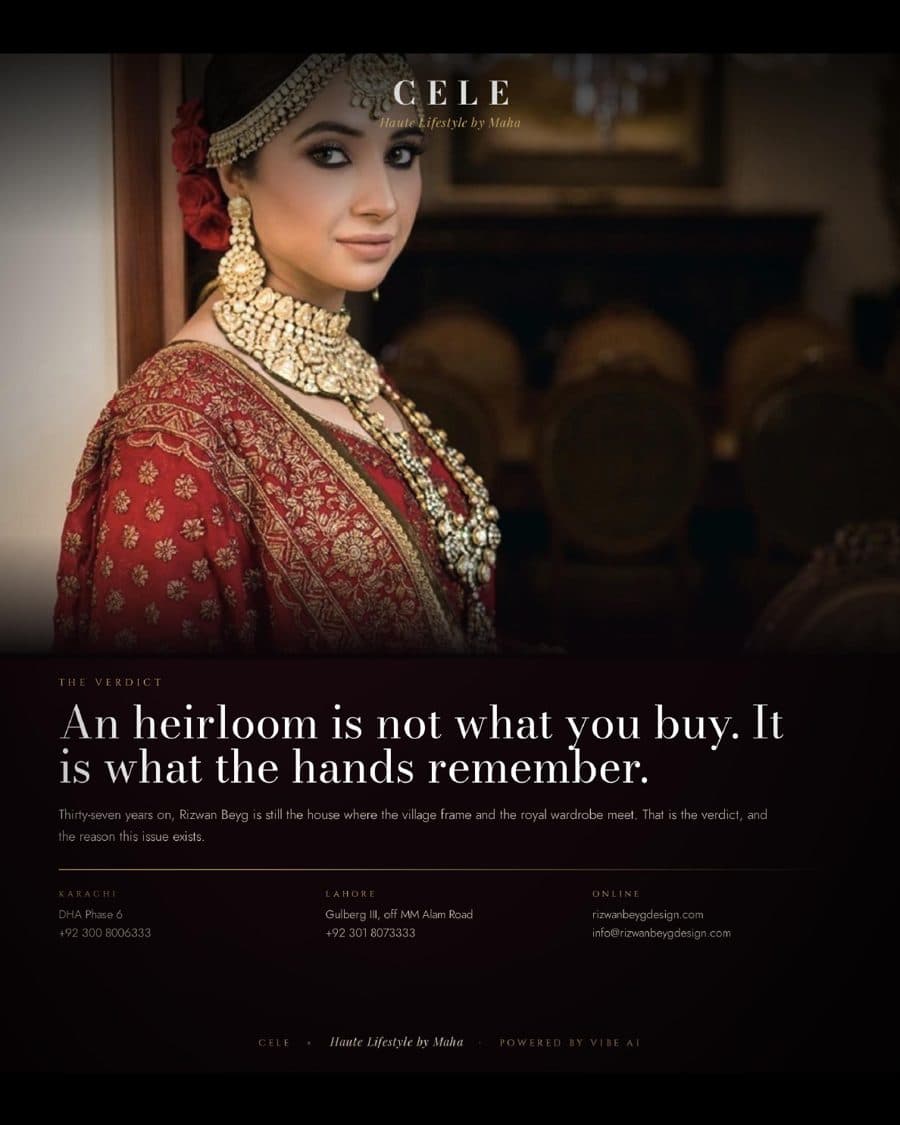
“Hand-embroidered, ivory and pearl, long straight kameez.”
Vibe AI knows the house.
Try Vibe AIRizwan Beyg Design · Karachi, DHA Phase 6 · Lahore, Gulberg III off MM Alam Road · rizwanbeygdesign.com. Photography courtesy of Rizwan Beyg Design. Feature enquiries: zrehman@celecart.shop
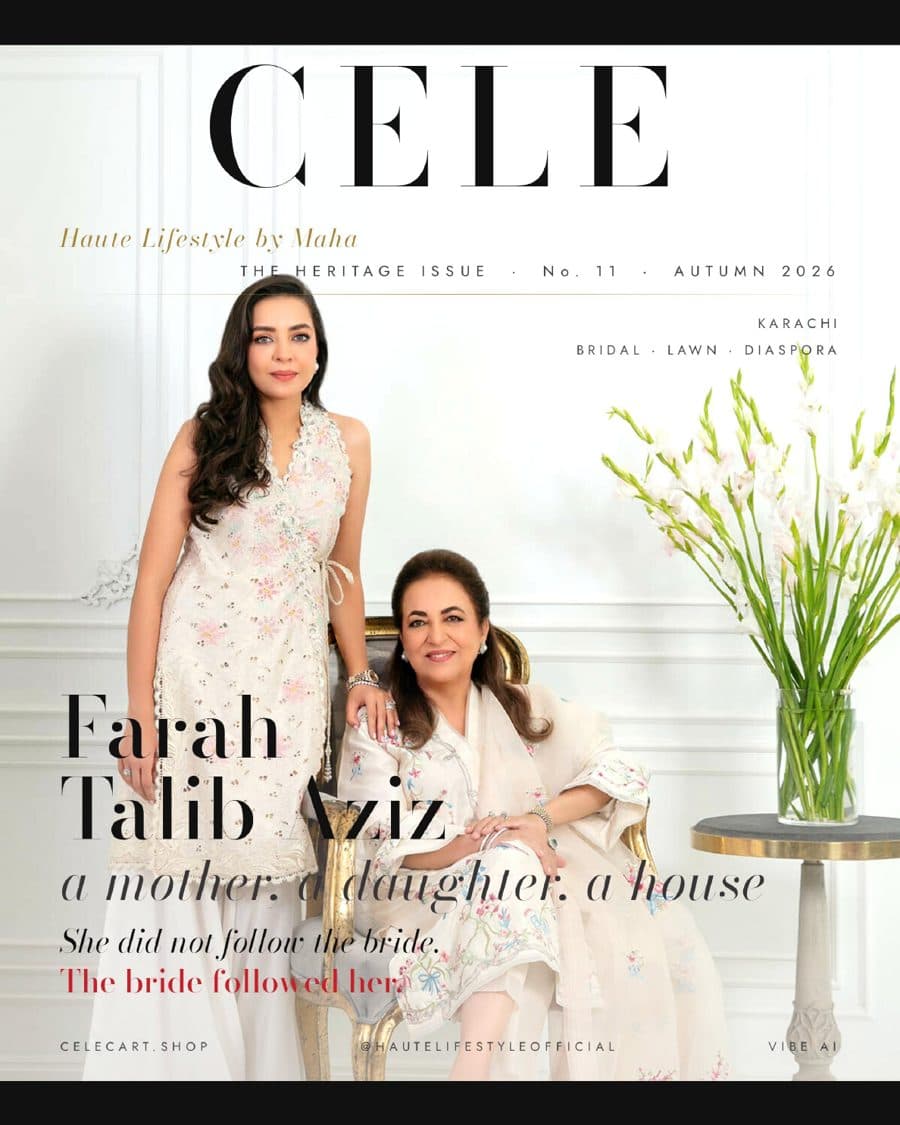
Farah Talib Aziz — A Mother, a Daughter, a House
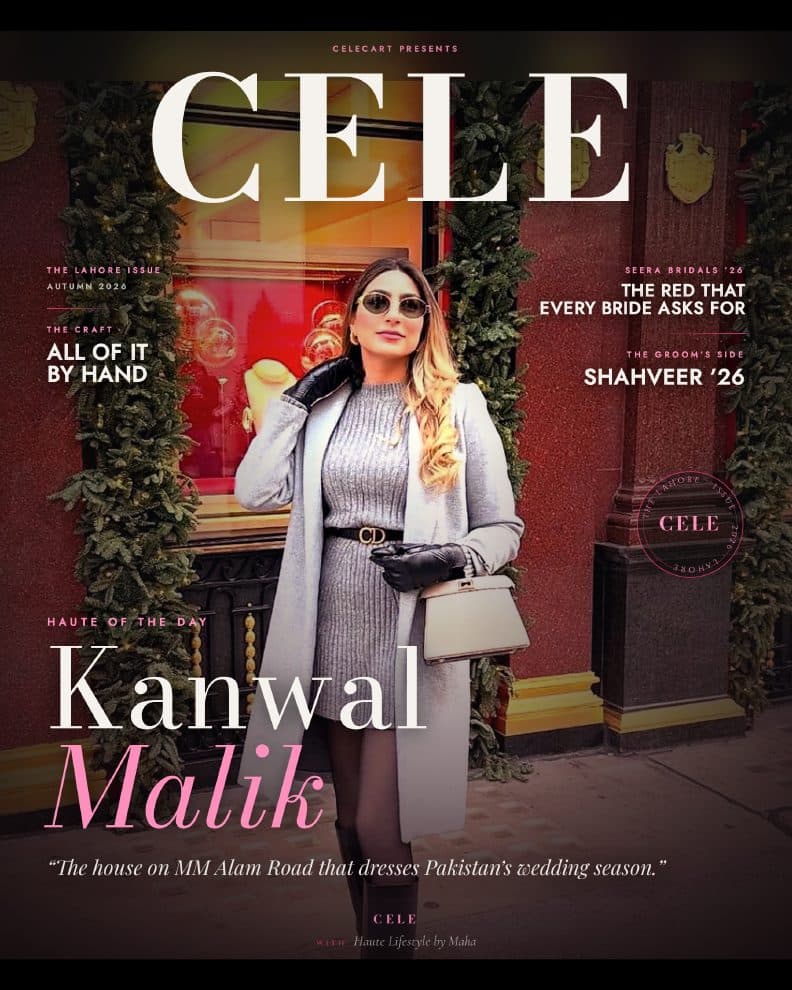
Kanwal Malik — The House on MM Alam Road That Dresses Pakistan's Wedding Season